Unveiling Ulva: A Special Issue in Botanica Marina
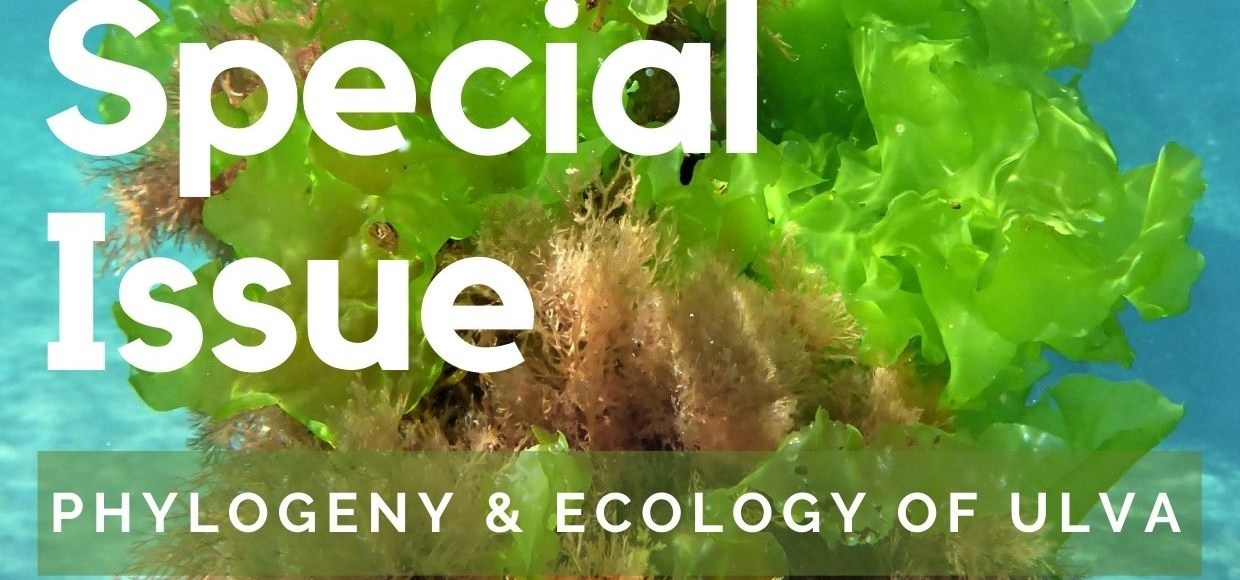
We are pleased to announce the publication of the second part of a special issue in Botanica Marina dedicated to Ulva, the green macroalgae known as sea lettuce. This issue brings together pioneering research on Ulva’s ecology, evolution, physiology, and its applications in aquaculture, biotechnology, and environmental sustainability.
Ulva offers immense potential in sustainable aquaculture, bioactive compounds, and environmental management, yet it also presents ecological challenges, notably green tides that disrupt marine ecosystems. Studies in this issue emphasize the importance of strain-specific cultivation strategies to optimize bioactive properties and address ecological concerns. Research on Ulva lacinulata demonstrates that manipulating light conditions influences antioxidant activity, underscoring the need for tailored cultivation methods. Furthermore, investigations into massive blooms, such as those affecting oyster farming in Taiwan, highlight the urgent need to understand and mitigate anthropogenic drivers of Ulva proliferation.
Taxonomic complexities remain a significant hurdle in Ulva research. Its morphological plasticity and cryptic nature often lead to misidentifications, but advances in molecular tools such as tufA barcoding are proving invaluable for accurate species identification, particularly in biodiversity-rich regions like the Mediterranean.
Ulva’s adaptability to diverse environments, including low-salinity waters, presents exciting opportunities for aquaculture expansion. Certain strains thrive under these conditions, showing enhanced growth rates and nutritional content, making them valuable for the Blue Economy. However, the strain-specific nature of these responses necessitates careful selection for optimal cultivation and application.
We extend our deepest gratitude to all contributing authors for their invaluable research and to the Botanica Marina editorial team for their support. Special thanks go to the European COST Action SeaWheat (CA20106), ‘Tomorrow’s Wheat of the Sea: Ulva, a Model for an Innovative Mariculture,’ led by Prof. Dr. Muki Shpigel (University of Haifa, Israel), for fostering collaboration and advancing Ulva research. This initiative has been instrumental in broadening our understanding of the Ulva system.
We hope this special issue serves as an essential resource for researchers, industry professionals, and environmental managers alike. By integrating ecological studies with biotechnological advancements, we move closer to harnessing Ulva’s full potential for sustainable development.

 Sophie Steinhagen - Seaweed Research
Unveiling Ulva: A Special Issue in Botanica Marina
We are pleased to announce the publication of the second part of a special issue in Botanica Marina dedicated to Ulva, the green macroalgae known as sea lettuce. This issue brings together pioneering research on Ulva’s ecology, evolution, physiology, and its applications in aquaculture, biotechnology, and environmental sustainability.
Ulva offers immense potential in sustainable aquaculture, bioactive compounds, and environmental management, yet it also presents ecological challenges, notably green tides that disrupt marine ecosystems. Studies in this issue emphasize the importance of strain-specific cultivation strategies to optimize bioactive properties and address ecological concerns. Research on Ulva lacinulata demonstrates that manipulating light conditions influences antioxidant activity, underscoring the need for tailored cultivation methods. Furthermore, investigations into massive blooms, such as those affecting oyster farming in Taiwan, highlight the urgent need to understand and mitigate anthropogenic drivers of Ulva proliferation.
Taxonomic complexities remain a significant hurdle in Ulva research. Its morphological plasticity and cryptic nature often lead to misidentifications, but advances in molecular tools such as tufA barcoding are proving invaluable for accurate species identification, particularly in biodiversity-rich regions like the Mediterranean.
Ulva’s adaptability to diverse environments, including low-salinity waters, presents exciting opportunities for aquaculture expansion. Certain strains thrive under these conditions, showing enhanced growth rates and nutritional content, making them valuable for the Blue Economy. However, the strain-specific nature of these responses necessitates careful selection for optimal cultivation and application.
We extend our deepest gratitude to all contributing authors for their invaluable research and to the Botanica Marina editorial team for their support. Special thanks go to the European COST Action SeaWheat (CA20106), ‘Tomorrow’s Wheat of the Sea: Ulva, a Model for an Innovative Mariculture,’ led by Prof. Dr. Muki Shpigel (University of Haifa, Israel), for fostering collaboration and advancing Ulva research. This initiative has been instrumental in broadening our understanding of the Ulva system.
We hope this special issue serves as an essential resource for researchers, industry professionals, and environmental managers alike. By integrating ecological studies with biotechnological advancements, we move closer to harnessing Ulva’s full potential for sustainable development.
Link to Botanica Marina, Special Issue on “Phylogeny and Ecology of Ulva. Part II): https://www.degruyter.com/journal/key/botm/68/1/html
Teilen mit: