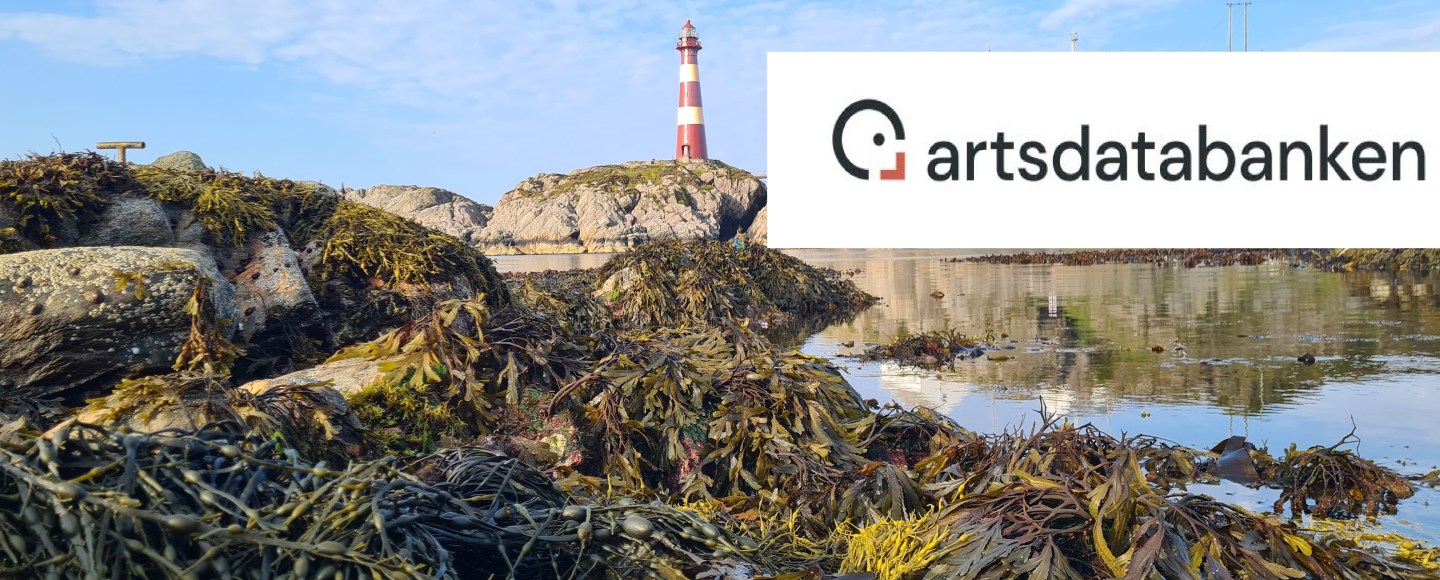
While Norway’s coastline stretches along more than 100,000 kilometers — one of the longest in the world — much of its marine biodiversity remains uncharted. Among the most mysterious inhabitants of these coasts are the green macroalgae, or seaweeds, that are important primary producers in coastal ecosystems and hold tremendous potential for sustainable aquaculture.
Now, our newly funded Norwegian Taxonomy Initiative (Artsdatabanken) project titled “An ocean of unknown species – Unravelling the biodiversity of Norway’s key ecologically and economically important green macroalgae (Ulvophyceae, Chlorophyta)” will address this long-standing gap. Led by our working group at the University Museum of Bergen (UMB), the project will deliver the first comprehensive survey and taxonomic inventory of Norway’s marine green macroalgae.
Why taxonomy and biodiversity research still matters
In the rush to expand seaweed farming and marine resource use, we often overlook a simple fact: we cannot protect or sustainably use what we cannot identify.
Many of Norway’s native and introduced seaweed species — especially within the green algal class Ulvophyceae — remain poorly understood, misclassified, or even completely unknown to science. Traditional identification methods based solely on morphology are no longer sufficient, as many species are cryptic, meaning they look identical but differ genetically and ecologically. This taxonomic uncertainty poses real-world risks. Misidentifications can lead to e.g.:
Invasive species spreading unnoticed,
Native species declining without detection, and
Aquaculture systems unknowingly cultivating the wrong or even harmful species.
Hence we are cultivating species we barely know, in an ocean of unknowns. Without molecular identification and a robust taxonomic foundation, both our marine biodiversity management and our growing seaweed industry are operating in the dark.
Our project will launch an ambitious nationwide field campaign, sampling green macroalgae across all of Norway’s marine ecoregions — from the southern fjords to the Arctic waters of Svalbard. All new and existing specimens will be preserved at the University Museum of Bergen, home to Norway’s most extensive macroalgae collection. By combining cutting-edge molecular tools with classical taxonomy, the project will strengthen national capacity in algal systematics and biodiversity monitoring.
These efforts will be supported by a strong and collaborative team of experts from the University of Bergen, the University of Gothenburg, Aarhus University, the Norwegian University of Life Sciences (NMBU), Skretting, Møreforsking, SINTEF, UiT The Arctic University of Norway, the University of Melbourne, Ghent University, and Seaweed Solutions.

 Sophie Steinhagen - Seaweed Research
While Norway’s coastline stretches along more than 100,000 kilometers — one of the longest in the world — much of its marine biodiversity remains uncharted. Among the most mysterious inhabitants of these coasts are the green macroalgae, or seaweeds, that are important primary producers in coastal ecosystems and hold tremendous potential for sustainable aquaculture.
Now, our newly funded Norwegian Taxonomy Initiative (Artsdatabanken) project titled “An ocean of unknown species – Unravelling the biodiversity of Norway’s key ecologically and economically important green macroalgae (Ulvophyceae, Chlorophyta)” will address this long-standing gap. Led by our working group at the University Museum of Bergen (UMB), the project will deliver the first comprehensive survey and taxonomic inventory of Norway’s marine green macroalgae.
Why taxonomy and biodiversity research still matters
In the rush to expand seaweed farming and marine resource use, we often overlook a simple fact: we cannot protect or sustainably use what we cannot identify.
Many of Norway’s native and introduced seaweed species — especially within the green algal class Ulvophyceae — remain poorly understood, misclassified, or even completely unknown to science. Traditional identification methods based solely on morphology are no longer sufficient, as many species are cryptic, meaning they look identical but differ genetically and ecologically. This taxonomic uncertainty poses real-world risks. Misidentifications can lead to e.g.:
Hence we are cultivating species we barely know, in an ocean of unknowns. Without molecular identification and a robust taxonomic foundation, both our marine biodiversity management and our growing seaweed industry are operating in the dark.
Our project will launch an ambitious nationwide field campaign, sampling green macroalgae across all of Norway’s marine ecoregions — from the southern fjords to the Arctic waters of Svalbard. All new and existing specimens will be preserved at the University Museum of Bergen, home to Norway’s most extensive macroalgae collection. By combining cutting-edge molecular tools with classical taxonomy, the project will strengthen national capacity in algal systematics and biodiversity monitoring.
These efforts will be supported by a strong and collaborative team of experts from the University of Bergen, the University of Gothenburg, Aarhus University, the Norwegian University of Life Sciences (NMBU), Skretting, Møreforsking, SINTEF, UiT The Arctic University of Norway, the University of Melbourne, Ghent University, and Seaweed Solutions.
Teilen mit: